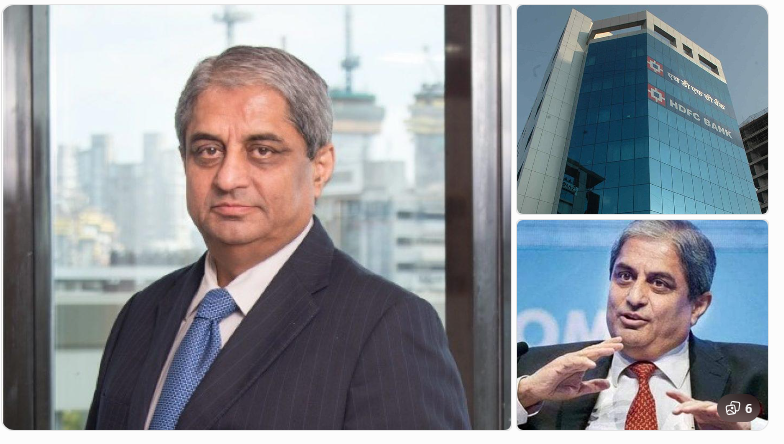
Hemindra Hazari’s view of Aditya Puri was highly nuanced: he acknowledged Puri as an exceptionally successful banker, but was consistently sceptical of the “Puri model” of leadership, long CEO tenure, governance, compliance and aggressive target-driven culture.
Hazari’s evolution of view
| Period | Hazari’s view | Main criticism |
| 2018 |
Admired Puri’s extraordinary business/stock-market success, but warned against excessive CEO power |
23½-year tenure, weak succession planning, board dependence and “hero worship” |
| 2020 |
Stronger criticism while still crediting Puri’s banking ability
|
Regulatory non-compliance, profit maximisation and aggressive culture |
| 2020–21 | Increasingly argued that problems emerging at HDFC Bank reflected weaknesses in the culture developed under Puri | Target-driven culture, transparency, employee conduct and compliance |
| 2022 | Retrospective criticism became much sharper | Puri’s leadership had, in Hazari’s view, helped establish an aggressive/“Alpha leader” model that other banks subsequently copied |
- Hazari never denied Puri’s achievement
In his March 2018 article, Hazari explicitly recognised that Puri had built HDFC Bank virtually from scratch and taken it to a market capitalisation of about US$74 billion, making it India’s largest bank by market capitalisation at the time.
But Hazari’s central argument was: success should not immunise a bank CEO from governance scrutiny.
He argued that Puri’s extraordinarily long tenure created the risk that:
- the CEO could dominate the board;
- directors could become beholden to him;
- analysts, investors, media and regulators could become excessively impressed by the share-price performance;
- decisions could become insufficiently challenged; and
- succession planning could become weak.
Hazari described this phenomenon as essentially “complacency and hero worship”, which he regarded as particularly dangerous for a bank handling public deposits.
- His biggest early objection was Puri’s tenure
This was probably Hazari’s most distinctive criticism of Puri.
In March 2018, with Puri approaching 24 years as CEO, Hazari argued that bank CEOs should not be allowed such extraordinarily long tenures. He contrasted this with the frequent rotation of senior personnel in banking (especially government banks) and argued that lengthy CEO tenures create a special governance risk because outsiders cannot easily know whether the institution’s accounts and internal culture are as robust as the headline numbers suggest.
He was particularly concerned about succession.
Paresh Sukthankar had been regarded as Puri’s likely successor, but after Sukthankar’s departure (submitted resignation on August 10, 2018 effective November 8, 2018) Hazari saw HDFC’s succession architecture as problematic. In a 2018 interview, he pointed out that Puri himself had described Sukthankar’s number-two position as having been created partly to reward him—and asked why an organisation as large as HDFC Bank had no obvious replacement when that executive left.
- By 2020, Hazari was openly attacking the “Puri model”
On October 25, 2020—immediately before Puri’s retirement—Hazari wrote that Puri deserved credit for making HDFC Bank India’s most valuable bank and for his ability to anticipate changing trends. But he simultaneously identified what he considered Puri’s “Achilles Heel”: a history of non-compliance with banking norms and regulation.
This is an important distinction.
Hazari was not arguing that Puri was an incompetent banker. His argument was closer to:
Puri was an extraordinarily effective banker whose success came with governance and cultural costs that the market had largely ignored.
- The crucial criticism: profit targets versus compliance
After Puri’s departure, Hazari became even more explicit.
In 2021, discussing the problems that had emerged at HDFC Bank, Hazari said he was “not surprised” that several issues had surfaced after Puri’s retirement. His explanation was that Puri had been intensely focused on achieving targets and profitability, with compliance consequently receiving insufficient priority.
That is probably the clearest summary of Hazari’s fundamental criticism of Puri:
Puri maximised the economic machine extraordinarily well, but Hazari believed the institutional checks and compliance culture did not receive equivalent attention.
- Hazari linked Puri to HDFC’s aggressive internal culture
His May 2022 article is particularly revealing because Hazari moved from criticising Puri personally to criticising what he saw as the legacy of Puri’s leadership philosophy.
He argued that HDFC Bank’s phenomenal success under Puri had inadvertently created a belief in Indian banking that a premium valuation required a larger-than-life “Alpha” CEO, an aggressive work culture, very long working hours and tolerance of abusive managerial behaviour.
Hazari’s concern therefore extended beyond Puri:
Puri → HDFC’s culture → imitation by other private banks → normalisation of aggressive target-driven management.
That is why his 2022 criticism is considerably broader than his 2018 criticism.
- He also scrutinised the Puri succession process
Hazari’s interest in Puri’s departure was not merely about who would replace him. He scrutinised the institutional process surrounding the succession.
In 2020 he became involved in the public controversy surrounding HDFC Bank’s search for Puri’s successor, including questioning whether an independent director should publicly discuss matters relating to the succession process.
Ultimately, Hazari viewed Sashidhar Jagdishan as having an important advantage: he had spent decades inside HDFC and had been effectively Puri’s “eyes and ears.” But Hazari simultaneously noted that Jagdishan had not been given enough direct responsibility for major operating businesses.
That reinforces his earlier criticism: Puri had built a formidable institution, but succession development underneath him was not as robust as the market assumed.
My assessment of Hazari’s position
I would characterise Hazari’s view as:
Puri’s banking performance: 9/10
Strategic/business ability: very high
Capital-market value creation: exceptional
Leadership culture: strongly critical
Succession planning: strongly critical
Board independence: critical
Compliance/governance: increasingly critical
Long-tenure risk: exceptionally critical
The interesting part is that Hazari’s criticism became progressively stronger after Puri’s retirement. In 2018 he was essentially saying “Puri is extraordinarily successful, but this much power and longevity is unhealthy for a bank.” By 2021–22 he was saying, in effect, “some of the problems now visible at HDFC Bank are manifestations of the culture that Puri’s model created.”
So Hazari’s view was not “Aditya Puri was a bad banker.” It was almost the opposite: Puri was such a successful banker that the market became unwilling to scrutinise the institutional risks accompanying his success.
If you want, I can next trace Hazari’s comments on Puri chronologically from 1994–2022, with the exact date, quotation/paraphrase, criticism, and whether each warning was subsequently vindicated.
Trace Hazari’s comments on Puri chronologically from 1994–2022, with the exact date, quotation/paraphrase, criticism, and whether each warning was subsequently vindicated
Yes. I went back through Hazari’s published archive rather than treating his later retrospective comments as if they were made contemporaneously.
An important qualification: I could not find evidence of Hazari publishing substantive criticism of Aditya Puri during 1994–2015. Puri became HDFC Bank CEO on 12 September 1994, but the earliest clearly identifiable Hazari material I found that directly scrutinises Puri/HDFC Bank is from 2016–17. So it would be misleading to manufacture a 1994–2015 chronology.
Here is the chronology I can substantiate.
Hazari on Aditya Puri: 1994–2022
| Date | Hazari’s comment / position | Issue criticised | Subsequent vindication? |
| 12 Sep 1994 |
No contemporaneous Hazari criticism located. This is Puri’s appointment date, not a Hazari comment.
|
— | — |
| 14 Dec 2016 | Hazari described HDFC Bank as India’s most valuable and one of the world’s most expensive banks, but highlighted what he called its “ruthlessly efficient business model” in the context of demonetisation. He contrasted the difficulties faced by ordinary customers with apparently better treatment of HNI/corporate-salary customers. | Customer treatment; whether an exceptionally profitable/efficient model necessarily meant equitable treatment. | Partially. Later controversies around sales practices and customer treatment made this concern more consequential, although the 2016 article was specifically about demonetisation. |
| 13 Dec 2017 |
Hazari attacked the “Wall of Silence” surrounding HDFC Bank’s RBI divergence. He argued that the bank was exceptionally highly valued and heavily covered, yet sell-side analysts and business media largely ignored the significance of the RBI’s findings.
|
Market complacency around HDFC Bank/Puri; reluctance to challenge the “pristine asset quality” narrative. | Strongly. Subsequent RBI actions and HDFC Bank controversies showed that the “nothing can go wrong at HDFC” consensus deserved greater scrutiny. |
| 23 Mar 2018 | This is Hazari’s first major, explicit Puri critique that I found. He acknowledged Puri’s extraordinary success but warned that “the sheer length of his tenure should be a concern” because banks are highly leveraged and ultimately deal with public deposits.
|
23½-year CEO tenure; excessive concentration of power; regulator’s tolerance of exceptionally long tenure. | Strongly vindicated as a governance warning, though not necessarily as proof that Puri’s tenure itself caused later failures. |
| 23 Mar 2018 | Hazari also warned about succession risk. He pointed to Paresh Sukthankar as apparently the sole heir apparent and wrote that relying on a single successor without a “spare” could prove costly.
|
Key-person risk and inadequate succession depth. | Very strongly. Sukthankar subsequently left HDFC Bank in 2018, leaving the succession question unresolved and eventually producing the highly contentious 2019–20 search process. |
| 23 Mar 2018 | Hazari noted Puri’s substantial stock-option-derived holding and warned that when a bank CEO owns a significant stake, conflicts of interest may arise, requiring careful board/RBI monitoring.
|
CEO incentives, concentration of ownership and depositor interests. | Not directly vindicated. This remained a governance-risk argument rather than a demonstrated conflict. |
| 7 Oct 2018 | Hazari placed Puri among India’s veteran private-bank CEOs whose departures would mark a major generational transition. He noted that Puri would have completed 26 years after taking charge in September 1994. | Excessively long tenure and generational succession. | Yes, in the sense that Puri’s departure became one of India’s most consequential bank-leadership transitions. |
| 9 Dec 2019 |
Hazari attacked HDFC Bank’s prolonged digital outage, arguing that the failure suggested serious deficiencies in its disaster-recovery/business-continuity arrangements and criticised the bank’s lack of public transparency. |
Technology risk, operational resilience and transparency. | Yes. RBI subsequently imposed restrictions on HDFC Bank’s digital expansion following repeated technology outages. This was one of Hazari’s clearer early warnings. |
| 24 Jan 2020 |
During the succession battle, Hazari described the situation as “Sumo Wrestling” and argued that the apparent disagreement between Puri and Deepak Parekh over the successor undermined corporate governance and raised questions about the board’s competence. |
Board independence; CEO succession; Puri’s influence over successor selection. | Strongly vindicated on the succession-process issue. HDFC ultimately had to go through a protracted selection process before Jagdishan was appointed. |
| 27 Feb 2020 | Hazari argued that the NRC/search committee process was effectively a formality, alleging that HDFC’s promoter still possessed disproportionate influence over selection of the CEO/chairman. | Corporate governance; promoter influence; independence of succession machinery. | Partially. The eventual succession controversy confirmed that the process was far from straightforward, although Hazari’s stronger assertion about the promoter’s legal control is an interpretive claim rather than a subsequent finding of wrongdoing. |
| 20 Jul 2020 | Hazari directly attacked HDFC Bank’s succession planning. Puri had said he had been clear about his successor for 25 years, but Hazari wrote that this “clarity was not visible to the capital market.” He called succession planning the board’s “strategic failure.”
|
Succession planning; board effectiveness; dependence on Puri. | Very strongly. The succession process had become a public problem by then, and Jagdishan was only selected after considerable uncertainty. |
| 4 Jul 2020 | Hazari scrutinised the abrupt departures of Abhay Aima and Ashok Khanna, both long-serving senior executives, and criticised HDFC Bank for refusing to provide clarity. Aima had worked with Puri since Citibank. | Transparency; senior-management departures; organisational culture. | Partially/strongly. Later disclosures and regulatory action around HDFC Bank’s automobile-loan business made the Khanna/Ashok-Khanna episode considerably more significant. |
| 30 Sep 2020 |
Hazari criticised the public narrative around HDFC Bank and specifically pointed to the December 2019 digital failure, GPS automobile-loan episode and senior-management departures as developments that deserved much greater scrutiny. |
Media/analyst complacency and the Puri “halo effect.” | Strongly vindicated in retrospect. Several of the issues he was highlighting subsequently became major regulatory/governance matters. |
| 19 Oct 2020 |
Hazari scrutinised HDB Financial Services, noting that Puri had reassured investors about HDFC Bank’s treatment of staff during COVID while HDB employees appeared to have been treated differently.
|
Consistency of group culture and management communication. | Unclear. This was a contemporaneous warning rather than a prediction that can be cleanly scored. |
| 25 Oct 2020 | This is Hazari’s most comprehensive assessment of Puri. He explicitly credited Puri with building India’s most valuable bank, praised his banking acumen and ability to anticipate trends, but identified his “Achilles Heel” as a history of non-compliance with banking norms and regulation, dating back to his Citibank corporate-banking period.
|
Regulatory compliance; aggressive business model; excessive focus on profit maximisation. | Very strongly vindicated. RBI penalties and later regulatory action concerning HDFC Bank’s automobile-loan irregularities gave substance to this warning. |
| 25 Oct 2020 | Hazari went further: he argued that the Puri model had brought “unsavoury aspects” including regulatory non-compliance, mis-selling, high pressure on junior staff to achieve targets and inadequate transparency over irregularities and senior exits.
|
Culture; sales pressure; mis-selling; transparency; compliance. | Strongly/partially vindicated, particularly on regulatory compliance and sales/target culture. Some individual allegations remain matters of interpretation rather than established findings. |
| 31 May 2021 | After the RBI penalty, Hazari explicitly wrote that Puri had a “history of compliance issues” and that irregularities occurring under his watch were “grave.” He urged Jagdishan to
take compliance as seriously as business targets.
|
Compliance culture under Puri. | Yes — strongest retrospective vindication. By this point the RBI had actually acted, rather than the issue being merely an analyst’s warning. |
| 2 Jul 2021 | Hazari acknowledged that Puri had built a bank worth over $100bn, but argued that the
subsequent “litany of crises” under Jagdishan represented an opportunity to reset the organisation.
|
Institutional legacy versus individual CEO success. | Partially. The distinction between Puri’s business success and institutional
weaknesses became increasingly important. |
| 12 Jul 2021 | Hazari contrasted Jagdishan’s low public profile with Puri’s iconic status and said Jagdishan was attempting to change the culture/DNA of the organisation.
|
The Puri-era leadership model and institutional culture. | Yes, in broad terms. Jagdishan explicitly undertook a reset of technology, governance and organisational processes. |
| 18 Aug 2021 | Hazari argued that Puri and Uday Kotak had maintained an “iron-clad grip on asset quality”, but warned that banking should not be “individual-based” and should instead be based on systems and appropriately constituted boards.
|
Key-person dependence; board composition; institutionalisation of banking. | Strongly vindicated as a governance principle, although it does not establish wrongdoing by Puri. |
| 4 May 2022 | Hazari’s retrospective criticism broadened dramatically. He wrote that HDFC’s phenomenal success under Puri had an “unfortunate” consequence: it encouraged the belief that premium valuations required larger-than-life “Alpha” leaders, aggressive work cultures, long hours and tolerance of abusive managerial behaviour. | Toxic work culture; Alpha-CEO model; target-driven management; Puri’s broader institutional legacy. | Partially/strongly vindicated, depending on the proposition. Hazari’s critique is primarily about culture and incentives, not a discrete regulatory finding. |
The important pattern
Hazari’s position changed considerably over time.
- 2016–17: “Why does nobody scrutinise HDFC?”
Initially his target was less Puri personally and more the market’s unquestioning admiration of HDFC Bank.
His 2017 “Wall of Silence” piece is important because it came before the succession crisis and before the major 2019–21 regulatory problems. He was already arguing that HDFC’s premium valuation and “pristine asset quality” reputation were suppressing independent scrutiny.
- March 2018: “Puri’s success itself creates governance risk”
This was the key turning point.
Hazari essentially said:
Puri is extraordinarily successful → therefore the market wants him to stay indefinitely → but precisely because he is a bank CEO, extraordinary tenure is dangerous.
His concerns were:
- 23½-year tenure;
- excessive CEO power;
- succession dependence on one person;
- insufficient successor development;
- substantial CEO shareholding;
- regulator complacency.
And one of his strongest predictions — succession risk — materialised unusually quickly when Paresh Sukthankar departed.
- 2019–20: “The institutional weaknesses are becoming visible”
This is where Hazari became much more aggressive.
He identified:
digital failure → transparency problems → senior departures → succession dispute → governance questions.
The extraordinary thing is that much of this happened before Puri actually retired.
His January 2020 succession article, followed by his February and July articles, shows that Hazari wasn’t simply criticising Puri retrospectively after the problems appeared. He was actively questioning the succession architecture while Puri was still CEO.
- October 2020: the definitive Hazari verdict
This is probably the best single document for understanding Hazari’s view.
He effectively says:
Puri was an exceptional banker and builder of shareholder value — but his model had a dark side.
He credits:
- banking acumen;
- anticipation of trends;
- profit orientation;
- shareholder returns;
- ability to build HDFC Bank into India’s leading private bank.
But he criticises:
- regulatory compliance;
- mis-selling;
- aggressive sales targets;
- pressure on junior employees;
- transparency;
- senior-management departures;
- excessive CEO control.
- 2021–22: from “Puri” to the “Puri legacy”
This is the most significant evolution.
By 2022 Hazari was no longer principally asking:
“Was Aditya Puri a good CEO?”
He was asking:
“What kind of banking culture did the Puri success story legitimise?”
His answer was quite severe: the extraordinary stock-market success of HDFC Bank encouraged other banks to believe that Alpha CEOs + aggressive target culture + very long working hours = superior valuation and performance.
That is a much broader critique than simply saying Puri had compliance problems.
How accurate were Hazari’s warnings?
I would score them as follows:
| Hazari warning | Score |
| Excessively long CEO tenure creates governance risk | 8/10 |
| HDFC succession planning was inadequate | 10/10 |
| Dependence on Puri created key-person risk | 9/10 |
| Market/analyst scrutiny of HDFC was inadequate | 9/10 |
| Digital/operational resilience was weaker than reputation implied | 9/10 |
| Transparency around senior departures was inadequate | 8/10 |
| Target-driven culture could generate compliance problems | 9/10 |
| Puri’s history of compliance issues deserved greater scrutiny | 9/10 |
| Puri personally caused all subsequent HDFC problems | Not established |
| Puri’s entire business model was unsuccessful | Clearly false |
My overall conclusion
Hazari’s assessment of Puri is best understood as “high-performance banker, but institutionally dangerous model.”
He did not deny Puri’s extraordinary achievement. In fact, his writings repeatedly acknowledge that Puri created enormous shareholder wealth and built HDFC Bank into India’s premier private-sector bank.
What distinguished Hazari was that he refused to accept the proposition that financial success automatically proved governance quality.
And, viewed retrospectively, his strongest early warning was not about bad loans. It was about institutional dependence on one extraordinarily powerful CEO and the inability of the board to demonstrate a credible succession system.
That warning was made explicitly in March 2018, more than two years before Puri left, and the subsequent Sukthankar departure and 2019–20 succession controversy make it arguably Hazari’s most prescient criticism of Puri.
_________________________________________________________________
DISCLOSURE
I, Hemindra Hazari, am a Securities and Exchange Board of India (SEBI) registered independent research analyst (Regd. No. INH000000594). I own equity shares in HDFC Bank mentioned in this report. Views expressed in this Insight accurately reflect my personal opinion about the referenced securities and issuers and/or other subject matter as appropriate. This Insight does not contain and is not based on any non-public, material information. To the best of my knowledge, the views expressed in this Insight comply with Indian law as well as applicable law in the country from which it is posted. I have not been commissioned to write this Insight or hold any specific opinion on the securities referenced therein. This Insight is for informational purposes only and is not intended to provide financial, investment or other professional advice. It should not be construed as an offer to sell, a solicitation of an offer to buy, or a recommendation for any security.