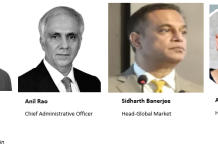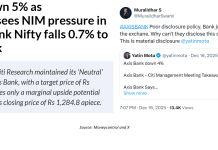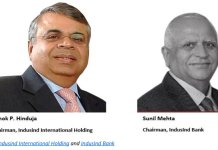
The confidential dealings in IndusInd Bank’s boardroom, the sanctum sanctorum, are getting increasingly exposed through the publication of board documents and confidential correspondence by investigative media. A month ago, an exclusive by The Wire revealed confidential minutes of IndusInd Bank’s audit committee meeting and emails exposing the conduct of independent directors at the troubled bank in investigating a massive insider trading case by a senior executive. These confidential documents, which were not challenged by IndusInd Bank, provide a radically different picture of the bank’s management and directors from the one these persons paint of themselves.
For IndusInd Bank, FY2025 was a shameful year, marred by accounting fraud in derivatives in the treasury division and dubious accounting in its microfinance division. These cost the bank’s Chief Executive Officer (CEO) and the Deputy CEO their jobs. The bank’s board of directors, however, gave themselves a clean chit, with the then chairman of the board stating at the bank’s 4QFY2025 results call on May 21, 2025,
“The Board, was not informed of the discrepancies, including at the time of approval of the financial results for the relevant accounting periods. Upon being made aware of the irregularities since March, the Board has swiftly taken active steps in understanding and addressing all areas of concern holistically and disclosing progress transparently at the appropriate stage.”
In the bank’s FY2025 annual report then chairman of the board stated,
“The Board and the Management undertook a highly rigorous and comprehensive review over last several months. It has implemented deep structural reforms which will reinforce a culture of integrity and compliance with the highest standards of governance.” (p. 7)
These assertions from the highest authority in the bank clearly state that the board was unaware of the discrepancies and that after they became aware the bank undertook a thorough review over the previous several months and implemented a system reinforcing a “culture of integrity and compliance.”
Unfortunately, for IndusInd Bank and its board of directors, The Wire story documents, through minutes of an Audit Committee meeting held on December 5, 2024 and email correspondence, that the board of directors, especially the then chairman of the board and the head of the audit committee, were aware of a massive unauthorised and insider trading of Rs 8.15 bn by Samir Agarwal, the then zonal head of the eastern region. This was fully documented by the bank’s internal vigilance report dated October 12, 2024. Strangely, although the bank’s internal vigilance report documents that Samir Agarwal had informed some of his seniors of the acquisition of Kesoram Industries prior to the public announcement, no attempt was made to investigate these unidentified seniors or their family accounts to find out whether they too had participated in trading on this information.
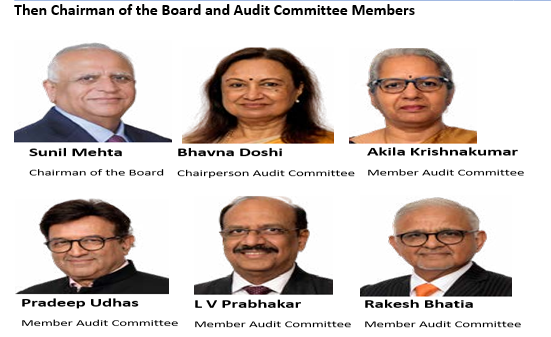
The question here is: after the board of directors were fully aware that a senior executive was engaging in massive unauthorised and insider trading, what did they do? Enforcing a “culture of integrity and compliance” would have ensured that the concerned individual would be severely punished and reported to the Securities and Exchange Board of India (SEBI) and to the stock exchanges, as per SEBI’s Prohibition of Insider Trading (PIT) Regulations, 2015 and the bank’s own insider trading code. Instead, what the email correspondence reveals is that Bhavna Doshi, the chair of the bank’s audit committee, was seeking clarity on certain key parameters to examining means of not disclosing Samir Agarwal’s conduct to the stock exchanges and to SEBI.
As disclosed in The Wire article, on December 6, 2024, Bhavna Doshi sent an email to Anand Das, the compliance officer/company secretary with a cc to all the audit committee members, select senior executives and then chairman of the board stating,
“…more clarity is required whether ZH [Zonal Head-Samir Agarwal] is a ‘designated person’ as the Opinion in recommendation states, “(i) stock exchanges where the securities are listed if the Zonal Head is a ‘designated person.’
Please confirm that aspect and also give reference of relevant section of code of conduct, regulations, etc. in the context
I think, it will be useful to obtain a clear opinion as to which specific regulations are the basis of the recommendation.”
This was despite the company secretary/compliance officer advocating making the disclosure, supported by a legal view from law firm, S&R Associates, which reaffirmed that Samir Agarwal was a “designated person” and as per SEBI’s PIT Regulations, 2015 the bank should disclose the facts to the stock exchanges and to the regulator.
It is apparent from the non-disclosure to the stock exchanges and the queries posed by Bhavna Doshi that after the exchange of emails, the board of directors went opinion-shopping and likely paid for opinions from former jurists or other law firms to the effect that the bank need not make a disclosure to the exchanges, as the individual had not violated SEBI’s PIT Regulations, 2015.
For the purpose of transparency, IndusInd Bank should make these opinions for the non-disclosure of Samir Agarwal’s illicit trading public as it would be interesting to review on what basis these former jurists/law firms justified their opinion. According to this analyst, Samir Agarwal’s classification as a “designated person” who had access to market sensitive insider information comes under Schedule C of SEBI’s PIT Regulations, 2015 pertaining to the code of conduct for intermediaries and fiduciaries.
By allowing Samir Agarwal to leave IndusInd Bank without reporting him to the regulator and the exchanges, the board of directors apparently allowed the individual to keep his illicit gains of Rs 531.5 mn, as documented by the bank’s internal vigilance report.
The major concern for stakeholders is: why did IndusInd Bank’s board of directors, and particularly its audit committee (consisting of all independent directors), go opinion-shopping to overrule the company secretary/designated compliance officer and the law firm S&R Associates view regarding disclosing such grave misconduct to SEBI and the stock exchanges? Being independent directors, there should have been no debate about whether or not to disclose this important problem once the designated compliance officer supported by a legal view had stated it should be disclosed. Instead, it appears, the board, consisting of an overwhelming majority of independent directors, deliberately sought and paid for legal opinions challenging their own compliance officer’s view.
A possible explanation for IndusInd Bank’s independent directors’ behaviour could be their concern regarding the share price of Indusind Bank, especially as the promoters (Hindujas) had pledged the bank shares to raise funds. It should be noted that the date of the internal vigilance report which documented Samir Agarwal and his family’s trades was October 12, 2024 and the date of the emails where Bhavna Doshi was posing queries in a possible attempt to evade disclosure was December 6, 2024. This was the period when the IndusInd Bank’s share price was under considerable pressure, falling from Rs 1,463 on September 30, 2024 to Rs 964 on December 31, 2024, on account of poor 2QFY2025 results (October 24, 2024); net profits fell by 40% year-on-year. Board directors probably took the view that as the bank’s promoters had already pledged 45.5% of their holdings, which increased to nearly 51% by end December 2024, any disclosure of news that a senior bank executive was indulging in massive unauthorised and insider trades would have further crashed the share price, resulting in even higher margin calls for the promoters.
Promoters’ Pledged Holdings in IndusInd Bank
| Promoter Pledged Holding | Share Price | |
| % | Rs | |
| 31-12-2023 | 45.5 | 1,581 |
| 31-03-2024 | 45.5 | 1,536 |
| 30-06-2024 | 45.5 | 1,465 |
| 30-09-2024 | 45.5 | 1,463 |
| 31-12-2024 | 50.9 | 964 |
| 31-03-2025 | 50.9 | 650 |
| 30-06-2025 | 50.9 | 873 |
| 30-09-2025 | 50.9 | 736 |
| 31-12-2025 | 50.9 | 866 |
| 30-03-2026 | 50.9 | 752 |
| 31-03-2026 | 42.8 | 752 |
Source: IndusInd Bank
Another possible explanation for the non-disclosure by the bank could have been the loss of confidence from corporate clients as the bank’s executives could not be trusted with confidential information. This would have been a body blow to the bank’s corporate business. It is also possible that the bank did not want to investigate more senior officials in its corporate division to determine whether the issue was endemic and hastily concluded that Samir Agarwal was a stray case.
Such conduct by the independent directors – allowing a senior executive who indulged in massive unauthorised and insider trades of Rs 8.15 bn to quietly exit the bank without informing SEBI and the exchanges – must be investigated by the regulator. Such conduct is not expected from independent directors, and their credibility is at stake, as the audit committee chair and the audit committee members remain the same.
When it comes to holding senior executives to account, the board of Indusind Bank has a patchy track record: while the CEO and deputy CEO were compelled to resign for their involvement in the derivatives problem, many other senior executives involved in the derivatives fraud and the fraudulent ALCO meeting have either been allowed to remain or have been allowed to resign. This is in stark contrast to the many mid-level executives who have been charge-sheeted, suspended and sacked by the bank, some of them for merely allegedly knowing about the fraudulent ALCO meeting.
While the bank has got a new CEO and a new chairman of the board, the critical audit committee of the board, including its chairperson, Bhavna Doshi (penalised by the bank for trading in Indusind Bank shares), remains the same. By allowing Samir Agarwal to quietly resign without apparently clawing back his massive illicit gains from unauthorised and insider trades, the board has compromised itself. Merely getting a new chairman of the board and a new CEO will not rectify the problem, as these details of the huge insider trading and the fraudulent ALCO meeting are in the public domain. To regain trust of the capital market and the public, the board, especially the audit committee, needs to be completely restructured. The regulators must undertake a thorough review of the role of the independent directors and whether they are being influenced by the promoters to the detriment of stakeholders’ interests. Only then can the capital market be assured that “a culture of integrity and compliance” has been enforced in IndusInd Bank.
Note: A questionnaire was sent to IndusInd Bank but the bank has declined to respond.
On May 19, 2026, news agency Moneycontrol reported that SEBI summoned the Indusind Bank company secretary and was also investigating the Audit Committee on this issue.
On June 3, 2026, Moneycontrol reported that SEBI searched the premises of Samir Agarwal, his family members and relatives pertaining to these insider trades.
On June 10, 2026, Moneycontrol reported that at the bank’s board meeting on June 9, 2026, Bhavna Doshi was replaced by Nilesh Vikamsey on the Audit Committee of the bank.
________________________________________________________
DISCLOSURE
I, Hemindra Kishen Hazari, am a Securities and Exchange Board of India (SEBI) registered independent research analyst (Regd. No. INH000000594). BSE Enlistment No. 5036. Please see SEBI disclosure here. Investment in securities market are subject to market risks. Read all the related documents before investing. Registration granted by SEBI and certification from NISM in no way guarantee performance of the intermediary or provide any assurance of returns to investors. The securities quoted are for illustration only and are not recommendary. I own equity shares in IndusInd Bank. Views expressed in this Insight accurately reflect my personal opinion about the referenced securities and issuers and/or other subject matter as appropriate. This Insight does not contain and is not based on any non-public, material information. To the best of my knowledge, the views expressed in this Insight comply with Indian law as well as applicable law in the country from which it is posted. I have not been commissioned to write this Insight or hold any specific opinion on the securities referenced therein. This Insight is for informational purposes only and is not intended to provide financial, investment or other professional advice. It should not be construed as an offer to sell, a solicitation of an offer to buy, or a recommendation for any security.